How to choose the right air compressor for your workshop
Air delivery, pressure, tank size, belt or direct drive — the few numbers that decide which compressor will keep up with your tools.
By Al Faiz team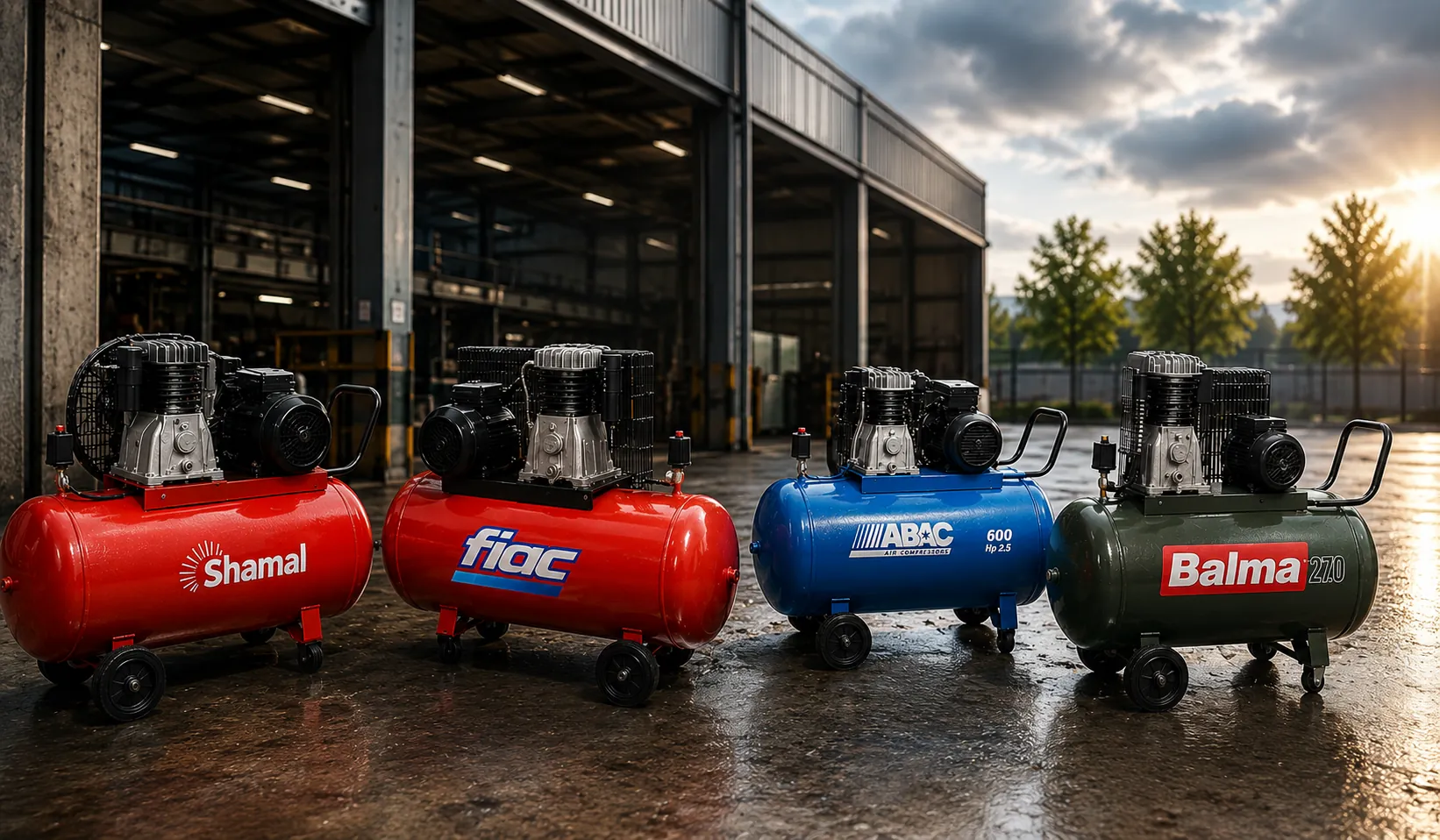
An air compressor that is too small runs non-stop, overheats and leaves your tools short of air. One that is too big costs more to buy and run. Getting it right comes down to a few numbers you can find in your tools’ manuals.
1. Start with the air your tools use
Every air tool lists how much air it needs, in litres per minute (l/min) or CFM. Add up the tools that will run at the same time, then add around 30% for hose leaks and wear.
- Tools used in short bursts — nailers, impact wrenches, blow guns, tyre inflators — need less air than you might think.
- Tools that run continuously — sanders, grinders, spray guns, sandblasters — need a compressor that can keep up all the time.
Compare your total with the compressor’s free air delivery (FAD), not its displacement. Displacement is what the pump moves in theory; FAD is the air you actually get, and it is noticeably lower on piston compressors.
2. Check the pressure
Most air tools are made to work at about 6.2 bar (90 psi). A compressor that reaches 8–10 bar keeps the tank above that while you work, so the tool doesn’t lose power as the tank empties.
3. Tank size: a buffer, not extra air
A bigger tank smooths out short, heavy demands and lets the motor rest between cycles. It does not increase how much air the pump makes. For continuous jobs, choose by FAD first and tank size second.
4. Direct drive or belt drive?
| Type | Best for |
|---|---|
| Direct drive | Compact and affordable. Good for occasional use, small workshops, tyre inflation and nailers. |
| Belt drive | The pump turns slower and runs cooler, so it lasts longer. Best for garages and workshops where air is needed all day. |
5. Oil-lubricated or oil-free?
Oil-lubricated pumps are more durable — the usual choice for regular workshop use. Oil-free compressors are lighter and need less maintenance, which suits light or mobile work.
6. Match your power supply
Smaller compressors run on a normal single-phase socket. Larger workshop units usually need a three-phase supply. Check what you have on site before you order.
7. Look after it in the UAE heat
- Install it in a shaded, well-ventilated place — heat is the main cause of early wear.
- Drain the water from the tank every day; humid air leaves a lot of condensation.
- Check the oil level and clean the air filter regularly, especially on dusty sites.
Not sure which one you need?
Send us the tools you run and how many people use air at the same time. We’ll recommend a model and send you a quote. Browse our air compressors or pneumatic tools.